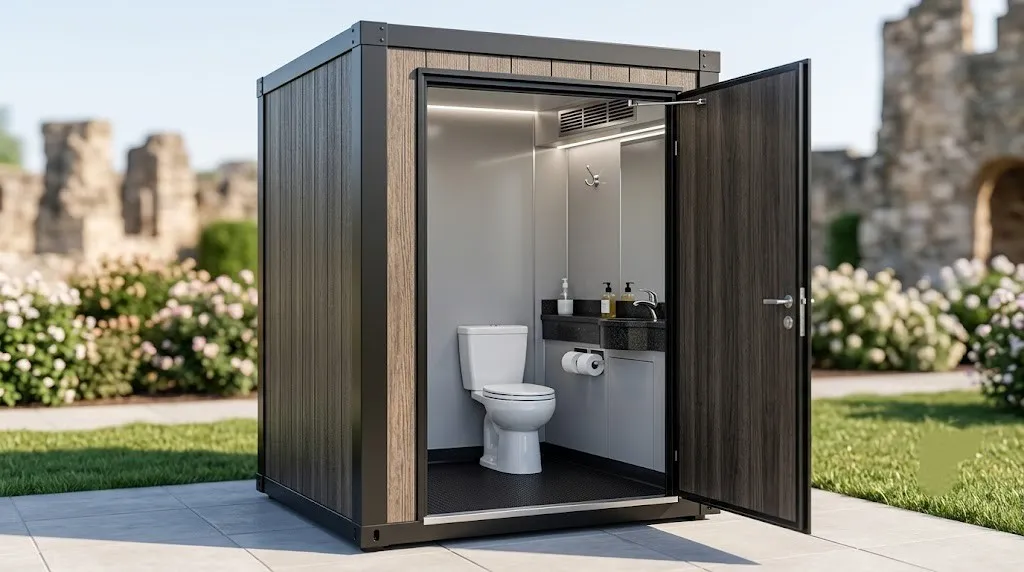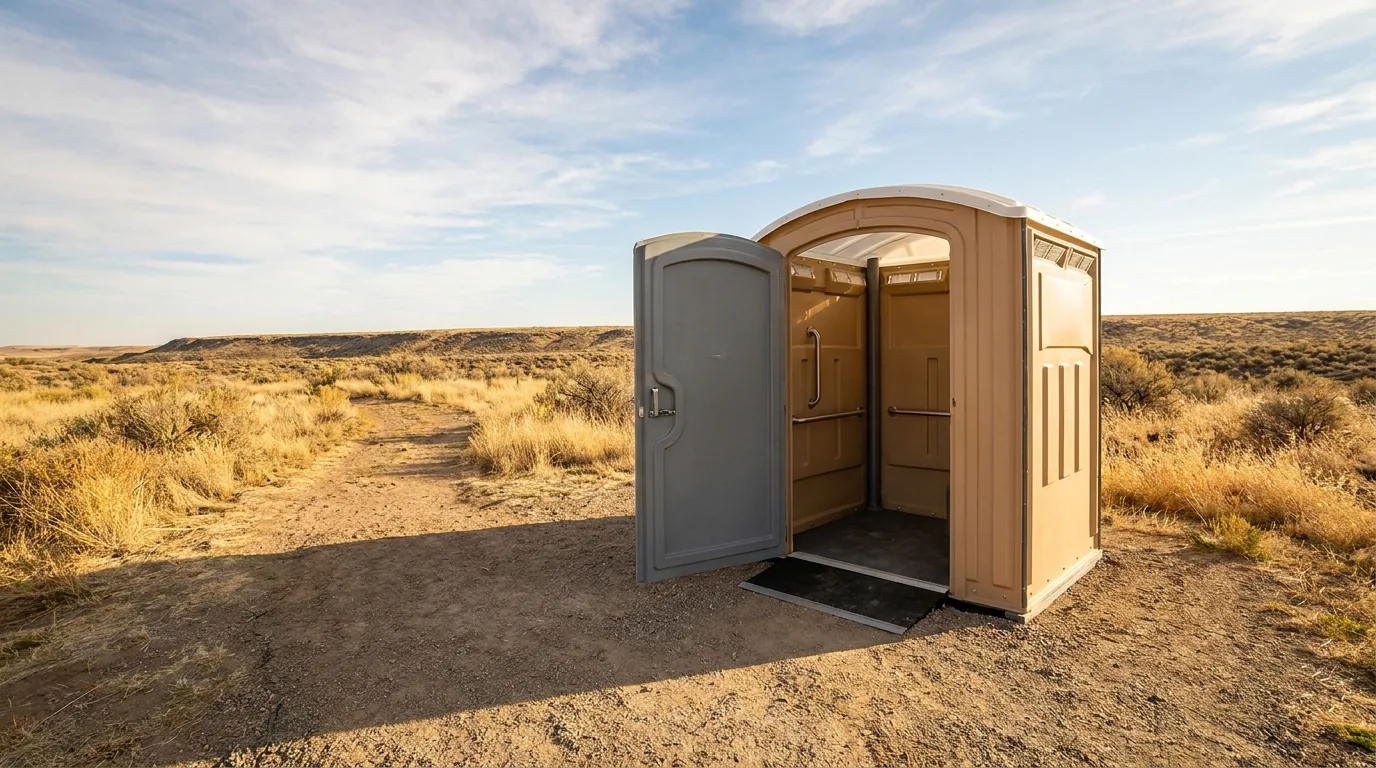
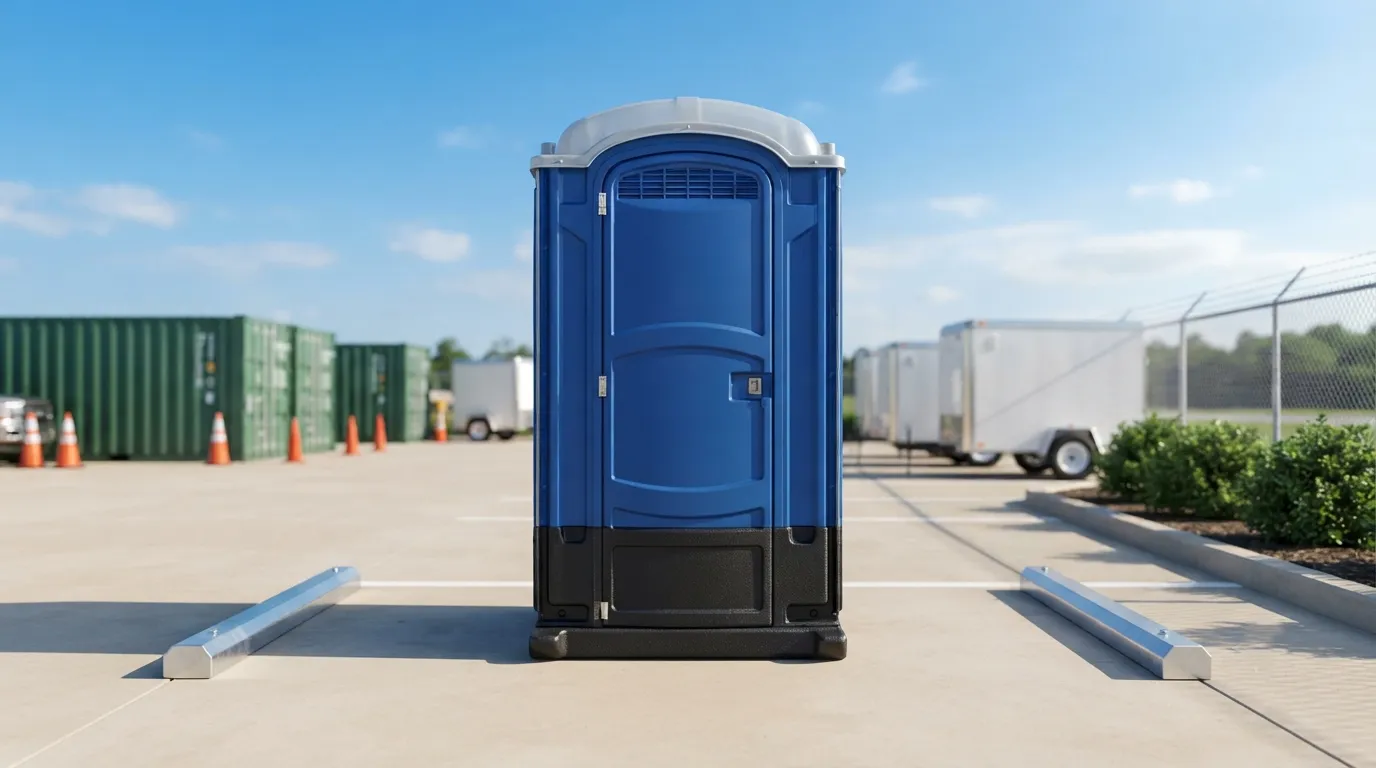
Standard porta potty
$125 to $250 a weekend
Memphis, TN
Race day restrooms in Memphis start with standard units at daily rates between $100 and $350, plus a portable sink or two at every water stop. A typical half marathon with 1,500 runners needs 12 to 15 units staged along the course and at the start line, based on runner count and OSHA 1926.51(c) guidance for worker facilities applied to crowd planning.
Race organizers in Memphis usually plan restroom counts around runner volume, not just OSHA minimums, since spectators and volunteers add real numbers to the count. A 5k with 500 runners might get by with 6 to 8 standard porta potty rental units at the start and finish. A full marathon with several thousand runners spread across corrals needs units clustered every half mile along the route, not just at the finish line. Under ADA Standards section 213.2, at least 5 percent of any cluster has to be accessible, with a minimum of one unit even at small water stops. That means a race with ten cluster points needs at least one ADA unit per cluster, not one for the whole event. We also stage extra units near medical tents and volunteer check-in, since those spots pull steady foot traffic for hours before the gun even goes off. Races with big crowds, like those finishing downtown or looping through parks, often add a restroom trailer rental near the finish chute so runners and family members aren't waiting behind a long line of single units. For guidance on sizing your specific race, our how many porta potties do I need page walks through the math by attendance and event length. Pair that with a look at event restroom rental options if your race includes an expo or post-race festival that runs longer than the race itself.
Setup for a Memphis race weekend starts days before runners arrive, especially if the course crosses multiple road closures or runs near power-dependent timing equipment. Units get delivered along the route based on mile markers, usually placed on stable, level ground per ADA Standards section 302.1, which requires surfaces be firm and slip resistant, important on grass infields or gravel shoulders. If your event needs lighting for a pre-dawn start, a light tower rental at the staging area helps volunteers see clearly before sunrise, and a temporary power pole may be needed to run timing systems or sound equipment near the finish line. Crews know how to brace a temporary power pole so it does not become a hazard: anchor the base with guy wires or a weighted stand, then check that the pole sits clear of the accessible route width required under ADA Standards section 403.5.1, which calls for 36 inches of clear path. Loose poles near a crowded finish chute are a hazard, so bracing gets checked the morning of the race, not just at drop-off. Fencing also matters: many Memphis races use temporary fence rental or crowd control barrier rental to keep runners on course and spectators back from the road. Handwashing stations belong near food tents and medical areas; handwashing station rental units satisfy the soap-and-towel requirement under 29 CFR 1910.141(d)(2), since sanitizer alone doesn't meet that standard.
Placement along a race route depends on where runners cluster, not just mile markers on a map. Start and finish lines need the heaviest concentration, since that's where crowds build before the gun and linger after finishers cross. Aid stations at the 5k and 10k marks are next, and any point where the course loops back near parking should get a unit too, since spectators tend to gather there. Memphis races that route through Germantown, 11.4 miles east, or loop toward Collierville, 20.9 miles east, need to plan for delivery trucks navigating suburban streets on race morning, so our porta potty placement guide covers turning radius and street access for those stretches. A standard unit runs about 92 inches tall and needs a stable footprint near 44 by 48 inches, so tight sidewalk corners or narrow medians in downtown Memphis sometimes call for smaller clusters instead of one big bank of units. If your race benefits from an ADA-compliant path to each unit, remember the 60 inch turning circle required under ADA Standards section 304.3.1 for wheelchair access at the door. For races with tight budgets, our porta potty rental cost page breaks down day and weekend pricing so you can compare staging a handful of units against a bigger cluster at the finish.
Book 4 to 6 weeks out for anything over 500 runners. Memphis race weekends fill delivery schedules fast, especially spring and fall. Smaller local 5ks can sometimes book closer to race day, but confirming street closures and delivery access early avoids last minute scrambling near the start line.
Yes. ADA Standards section 213.2 requires at least one accessible unit in any cluster, regardless of race size. A small neighborhood 5k with two porta potty stations still needs one accessible unit at each cluster point.
Not usually. Point-to-point courses need units pre-placed at fixed spots since trucks can't reposition units while runners are on course. Plan aid station restrooms based on your final route map, not a moving schedule.
Units stay functional in rain, but footing near entrances can get slick. Check our porta potty in winter page for cold-weather notes, and make sure ground surfaces meet the slip-resistant standard under ADA Standards section 302.1 before runners start lining up.
Yes, especially where food or sports drink gets handled. Soap and towels are required under 29 CFR 1910.141(d)(2). A simple portable sink rental at each aid station keeps volunteers and runners covered without relying on sanitizer alone.
What we rent
Typical Memphis ranges, not a quote. Delivery is $50 to $150 and a weekly service visit $30 to $60. See the full cost breakdown.
$125 to $250 a weekend
$200 to $350 a weekend
$199 to $300 a weekend
Quoted by stall count
The rest of the yard
We deliver across Shelby County and the surrounding metro:
Next step
Tell us the address, the dates and the headcount. We size the order and confirm the route.